Bespoke / Motifs and palettes
One shape. A colour that travels.
A Lacour · Bevoy mural comes down to three choices: a motif, a palette and a rhythm. Here are our motif families, the seven reference tints and how to compose a gradient from one resin piece to the next.
14 motifs · 7 tints · One tint per piece
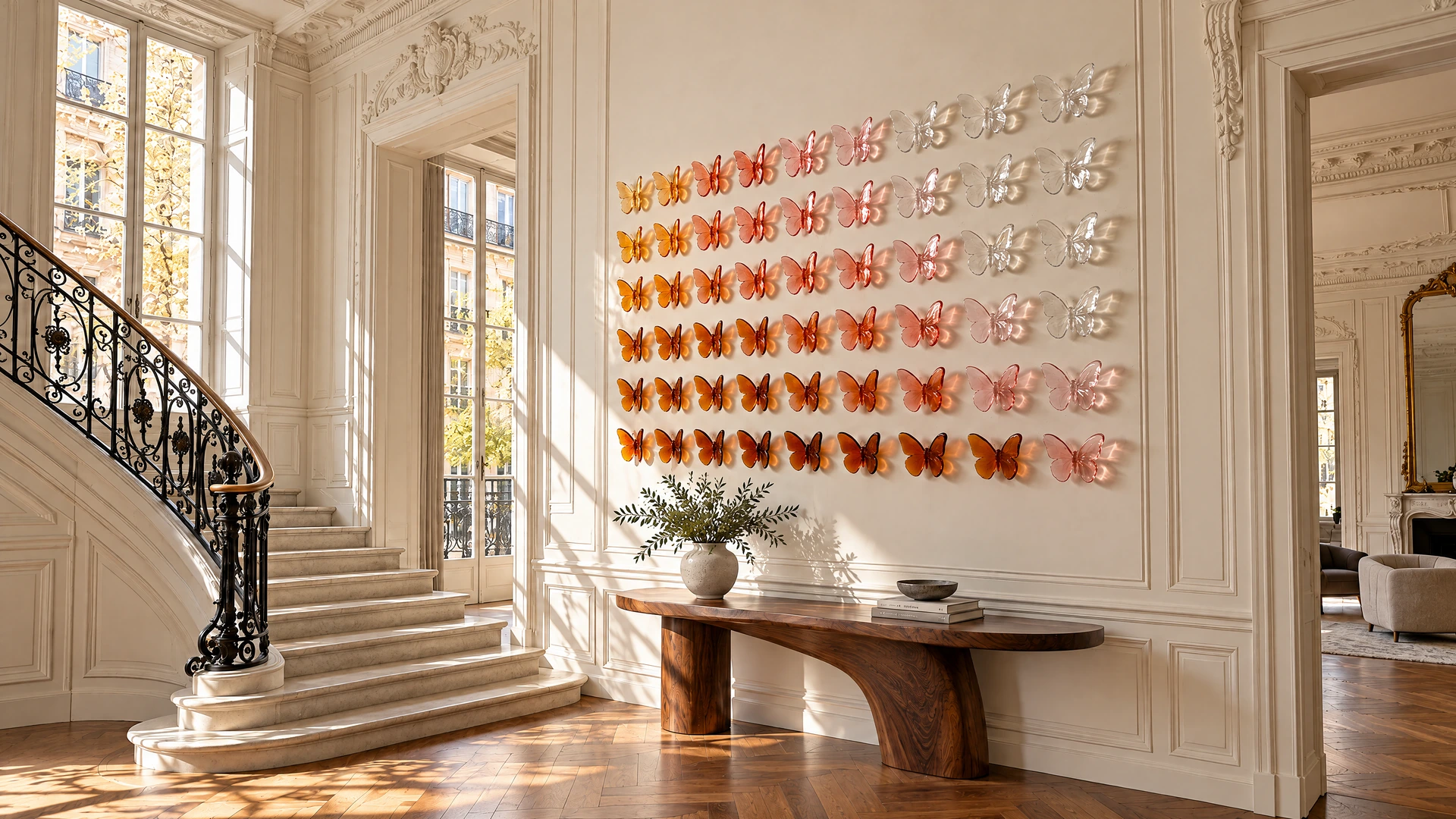
01 / The motifs
An outline that reads from afar.
A good motif comes down to an outline: it should read at a glance from the far side of the room, even when repeated across a whole wall. Our motifs fall into four families.
- Graphic shapes. Gems, hexagons, chains: crisp grids and an architectural reading.
- Organic shapes. Koi, butterflies, leaves, pebbles, saguaro: movement and softness.
- Signs. Hearts, letters: a simple message, carried by repetition.
- Trades and passions. Croissants, chilli peppers, bicycles, the oval ball: the motif says what happens in the space.
Other shapes, such as the bee, the brick or the crown, can be found in the shape selector on the Bespoke page.
Fourteen motifs, fourteen settings.
Each card opens the motif’s setting on the Bespoke page. All are visualisations: none is a photograph of an existing mural.
 Visualisation
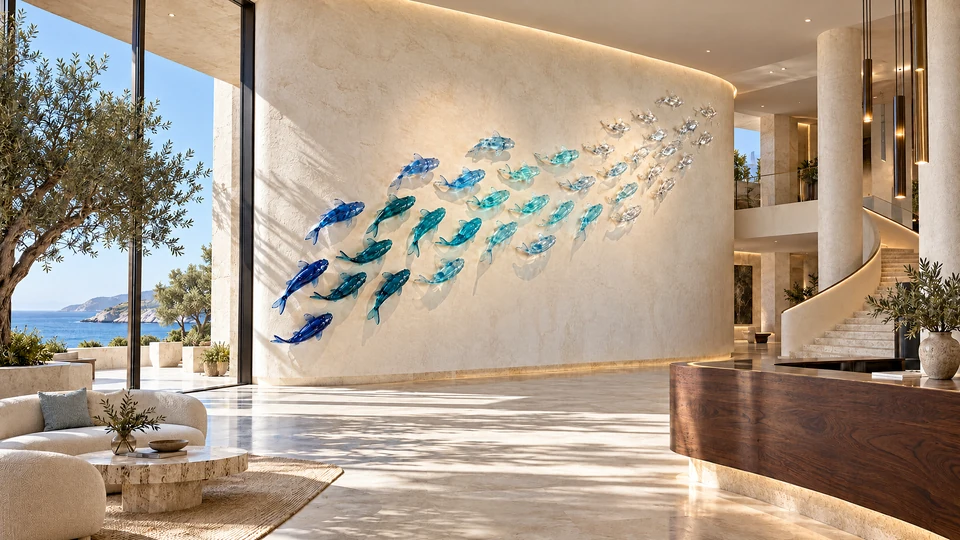
Koi ↗
Koi, Blue Shoal. Koi wall art that rises on a diagonal, from midnight blue to crystal.
 Visualisation
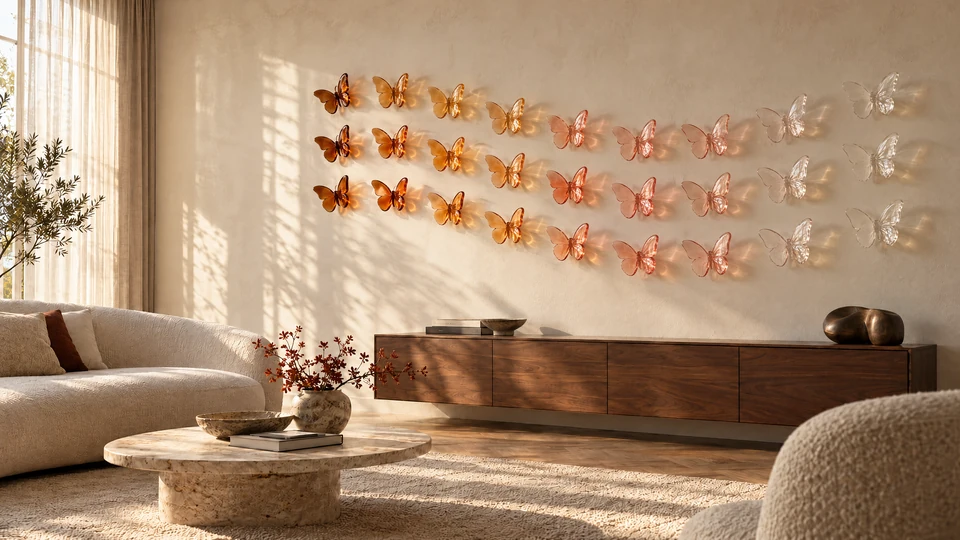
Butterflies ↗
Butterflies, Amber. Rows of resin wings moving from amber to crystal.
 Visualisation
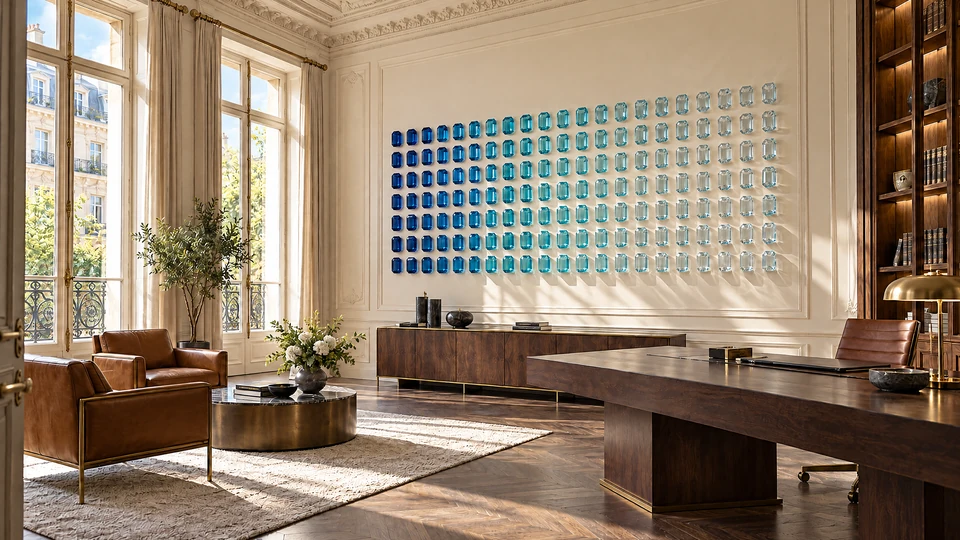
Gems ↗
Gems, Blue Fade. Facets that catch the light, set out in a regular grid.
 Visualisation
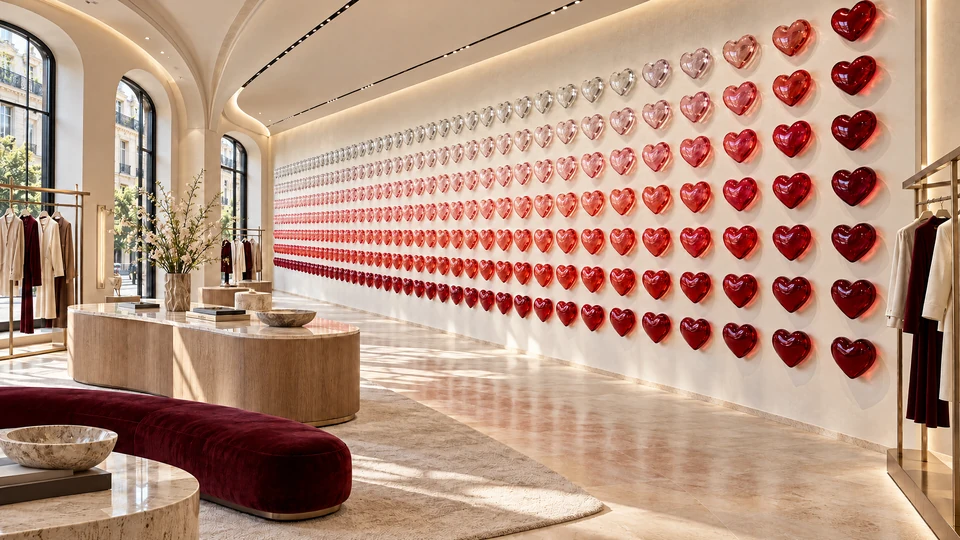
Hearts ↗
Hearts, Red Fade. Heart wall art in long rows, from deep red to crystal.
 Visualisation
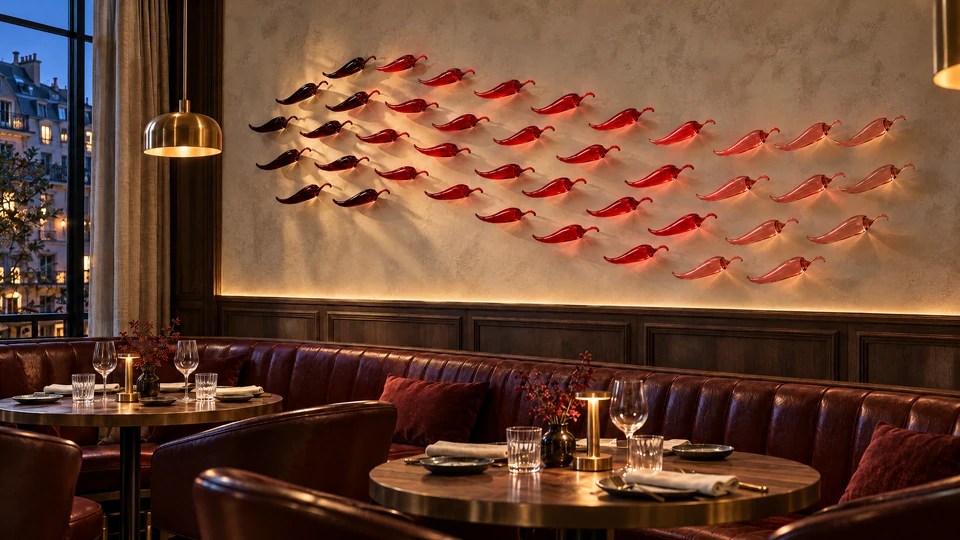
Chilli peppers ↗
Chilli Peppers, Ruby. A taut curve, and a red that pales towards crystal.
 Visualisation
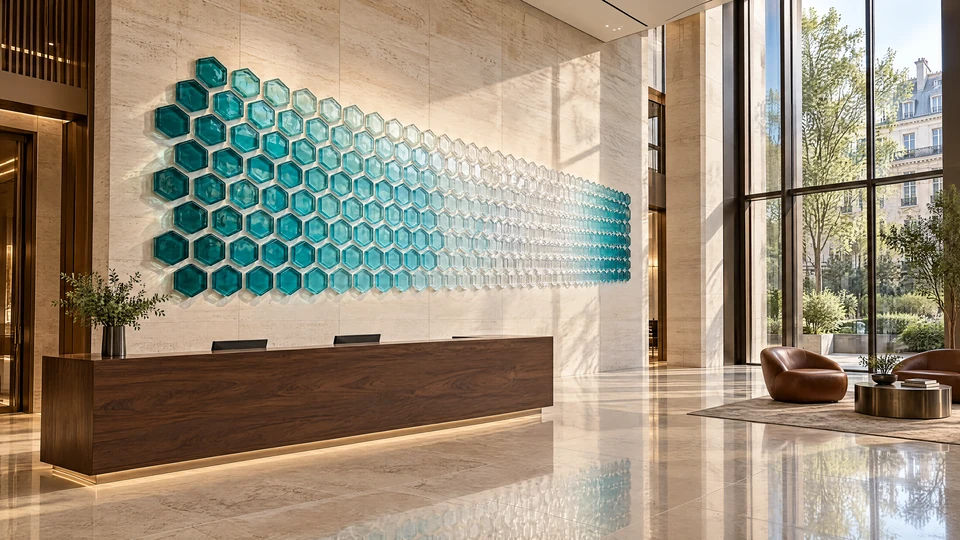
Hexagons ↗
Hexagons, Emerald. Geometric hexagon wall art in a tight pattern that lightens towards one edge.
 Visualisation
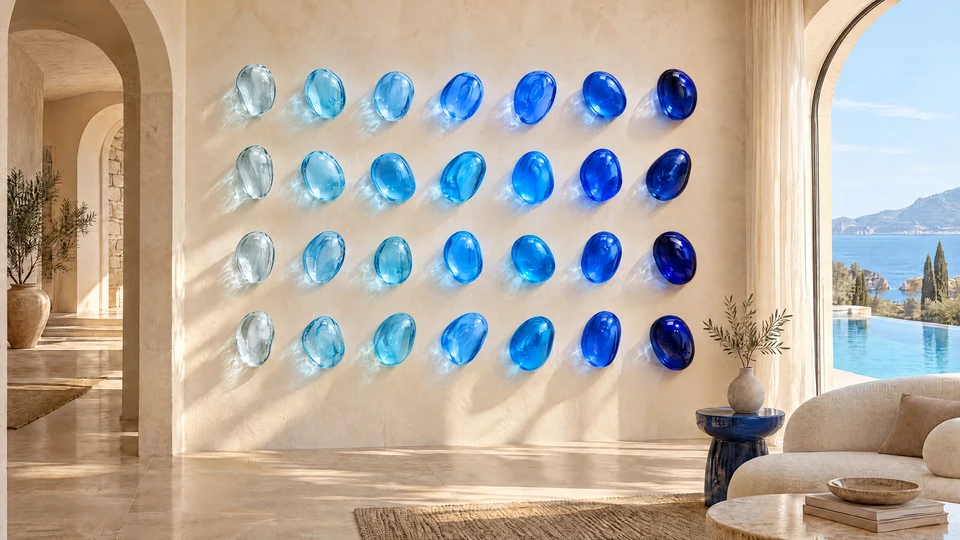
Pebbles ↗
Pebbles, Azure. Round, slow shapes, from crystal to deep blue.
 Visualisation
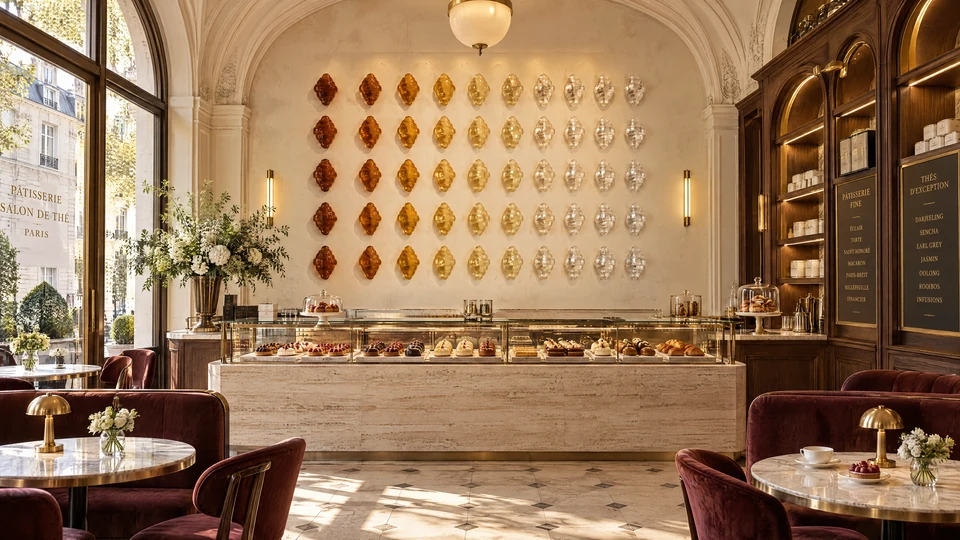
Croissants ↗
Croissants, Amber. A motif that announces the trade of the house, from dark amber to crystal.
 Visualisation
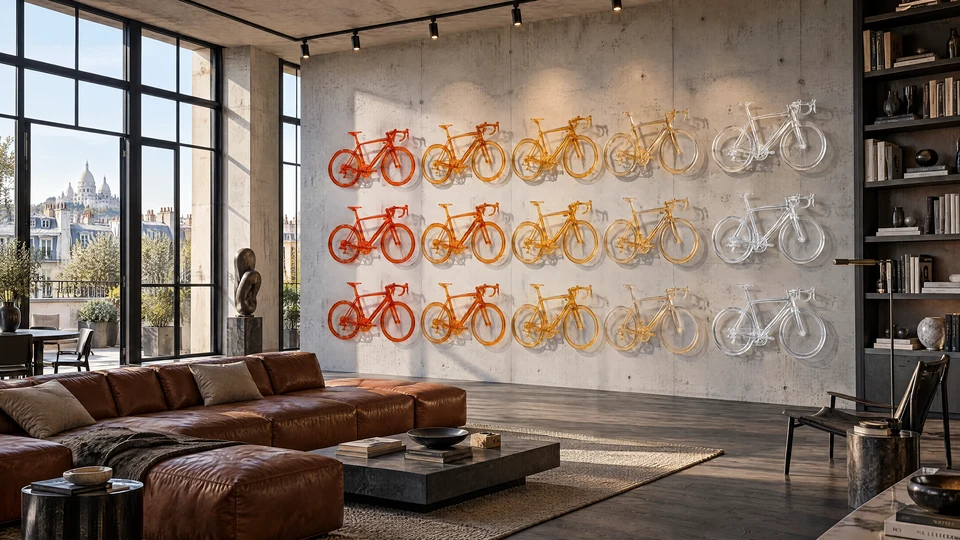
Bicycles ↗
Bicycles, Orange Fade. A passion in three rows, from bright orange to crystal.
 Visualisation
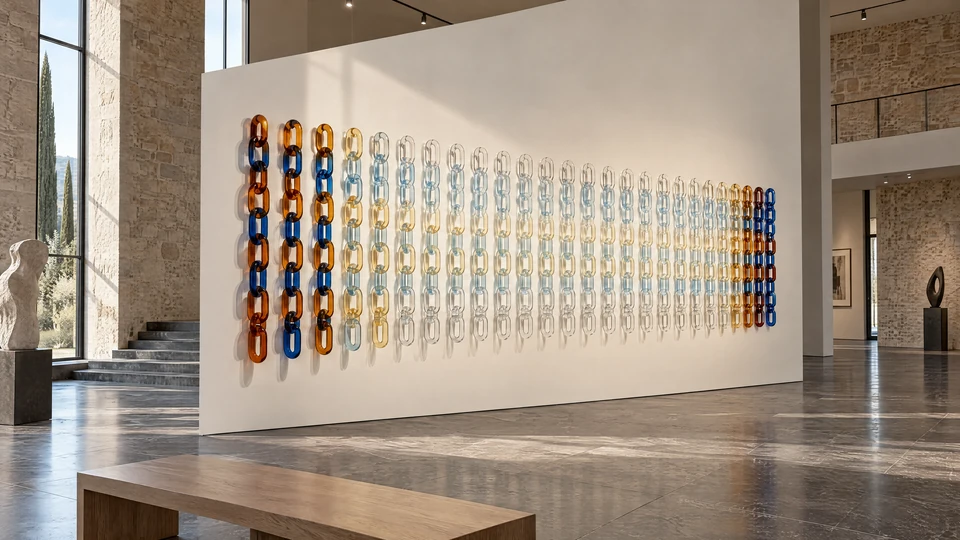
Chains ↗
Chains, Polychrome. Links in several tints that pale towards the centre, then regain their colour.
 Visualisation
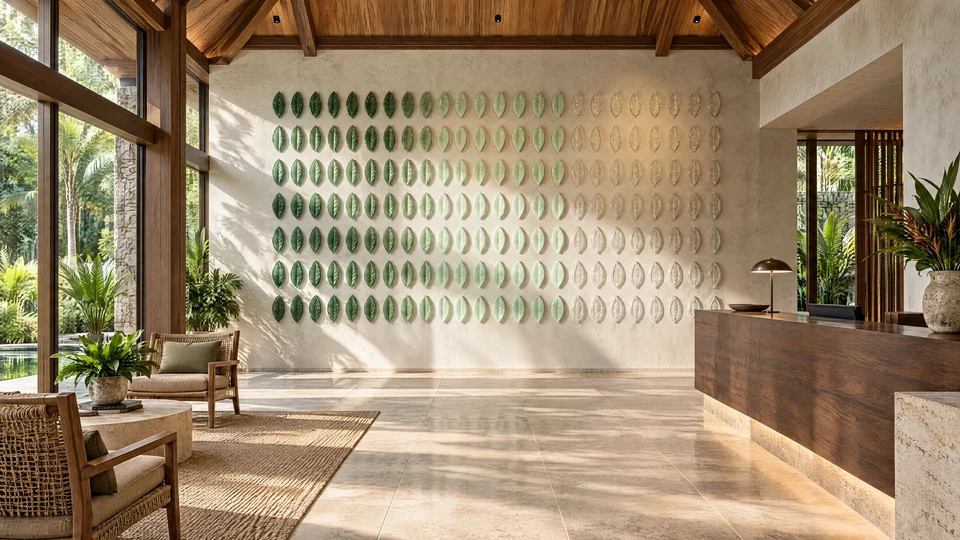
Leaves ↗
Leaves, Green Fade. Leaf wall art in close rows, from deep green to crystal.
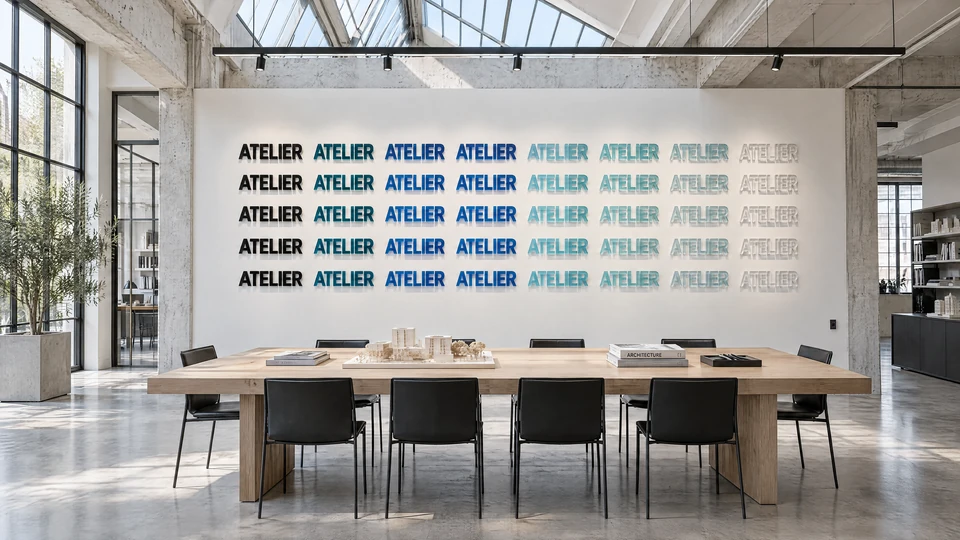 Visualisation
Typography ↗
Typography, Bespoke. A word repeated in resin letters, from the darkest tint to crystal by way of blue.
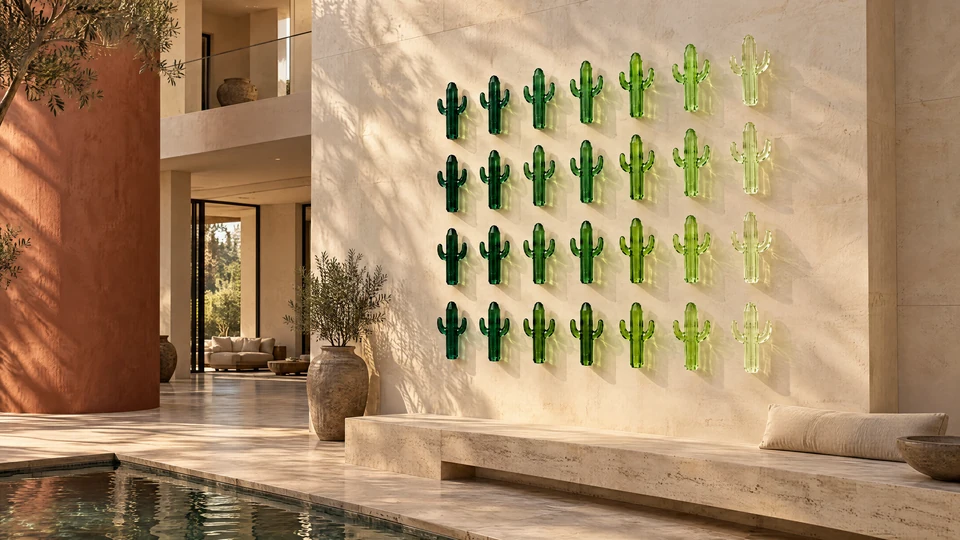 Visualisation
Saguaro ↗
Saguaro, Oasis. A cactus outline, from deep green to soft green.
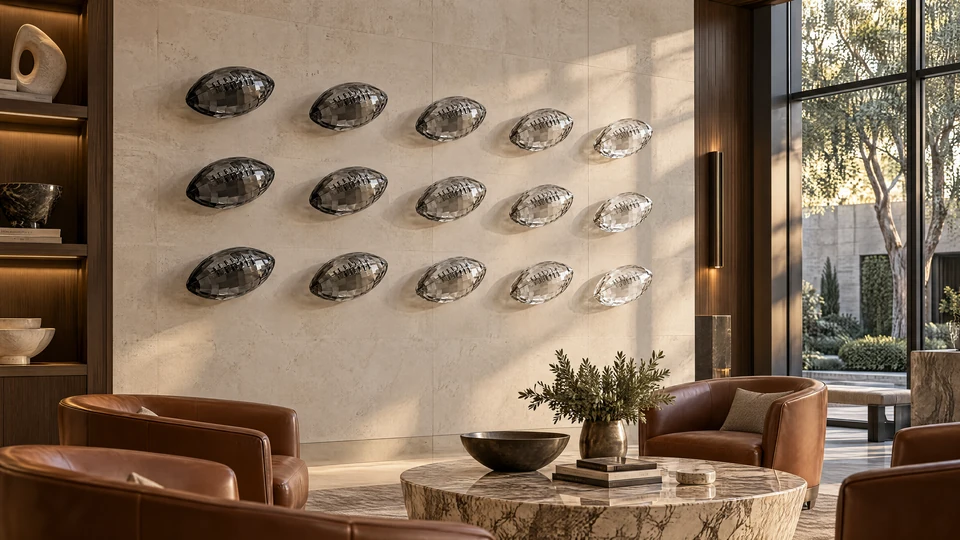 Visualisation
American football ↗
Football, Smoke. The oval ball of American football, faceted, from smoke grey to crystal.
02 / The tints
Seven reference tints.
Our reference tints are the starting point of every palette. Each piece in a mural carries just one; their sequence makes the colour of the wall.
- Ruby. A deep red, the colour of the chilli peppers and the hearts.
- Amber. A golden orange, the colour of the butterflies and the croissants.
- Emerald. A deep green, for the leaves, the hexagons and the saguaro.
- Azure. A clear blue, for the koi, the gems and the pebbles.
- Amethyst. A violet, for a less expected palette.
- Smoke. A quiet grey, the colour of the oval ball.
- Crystal. The lightest, almost colourless: often where the gradient ends.
Colours on screen are only a guide. Coloured resin is best judged in the light of the room.
03 / The gradient
From deep to light, piece by piece.
A Lacour · Bevoy gradient is not painted: it is composed, one piece after another. Four decisions are enough.
One family, or a passage
A palette can stay within one colour family, from midnight blue to crystal. It can also move from one tint to another, like the butterflies that go from amber to pink before ending in crystal. One family feels calm; a passage draws the eye.
From deep to light
The simplest reading runs from the densest tint to the lightest. Put the deep end where the eye lands first, or where the wall needs weight, and let the light end open towards the daylight.
Rhythm
The number of pieces and their spacing give the wall its character. A regular grid, like the gems or the leaves, stays calm and architectural. A looser shoal, like the koi, brings movement. A single line, like the pebbles in the spa, reads slowly.
Direction
A horizontal gradient follows a long wall, a dining room or a corridor. A diagonal lifts the eye towards a staircase or a high ceiling. A gradient that pales in the centre and then regains its colour, like the chains, creates two poles.
04 / Choosing
A motif for the place and the message.
Start with what the wall needs to say, then with where it will be seen from.
- To welcome. A lobby or reception needs a strong image at a distance: a shoal of koi, butterflies, gems.
- To assert an identity. A head office or a law firm benefits from crisp geometry: hexagons, gems, chains, or resin letters.
- To calm. A spa, a bedroom or a living room calls for rounded shapes and close tints: pebbles, leaves, saguaro.
- To show a trade. A restaurant, a patisserie, a club: chilli peppers, croissants, bicycles, the oval ball.
- To give a boutique its signature. A wall seen through the shop window: hearts or chilli peppers, in a bold red that carries.
Have another shape in mind, linked to your place or your story? It can be explored with you: tell us about it in your enquiry and we will reply by email.
05 / Questions
Frequently asked questions.
Are the images on this page finished projects?
No. Each card pairs a motif with an imagined space: these are visualisations, for illustration only.
Can a mural combine several tints?
Yes, from one piece to the next. Each piece keeps a single tint; the palette can stay within one family or move from one reference tint to another.
Are the colours on screen those of the resin?
They give an idea. Coloured resin changes with the light passing through it, so the palette is chosen with you, taking the light on your wall into account.
How do I choose between two motifs?
Think about where the wall will be seen from. From afar, a simple outline and a clear gradient read best; up close, the facets of the gems or the oval ball come into their own. You can also write to us with both ideas.
Choose your motif.
A motif, a palette, the size of your wall: describe your space and we will reply by email.